
The deeds to be told
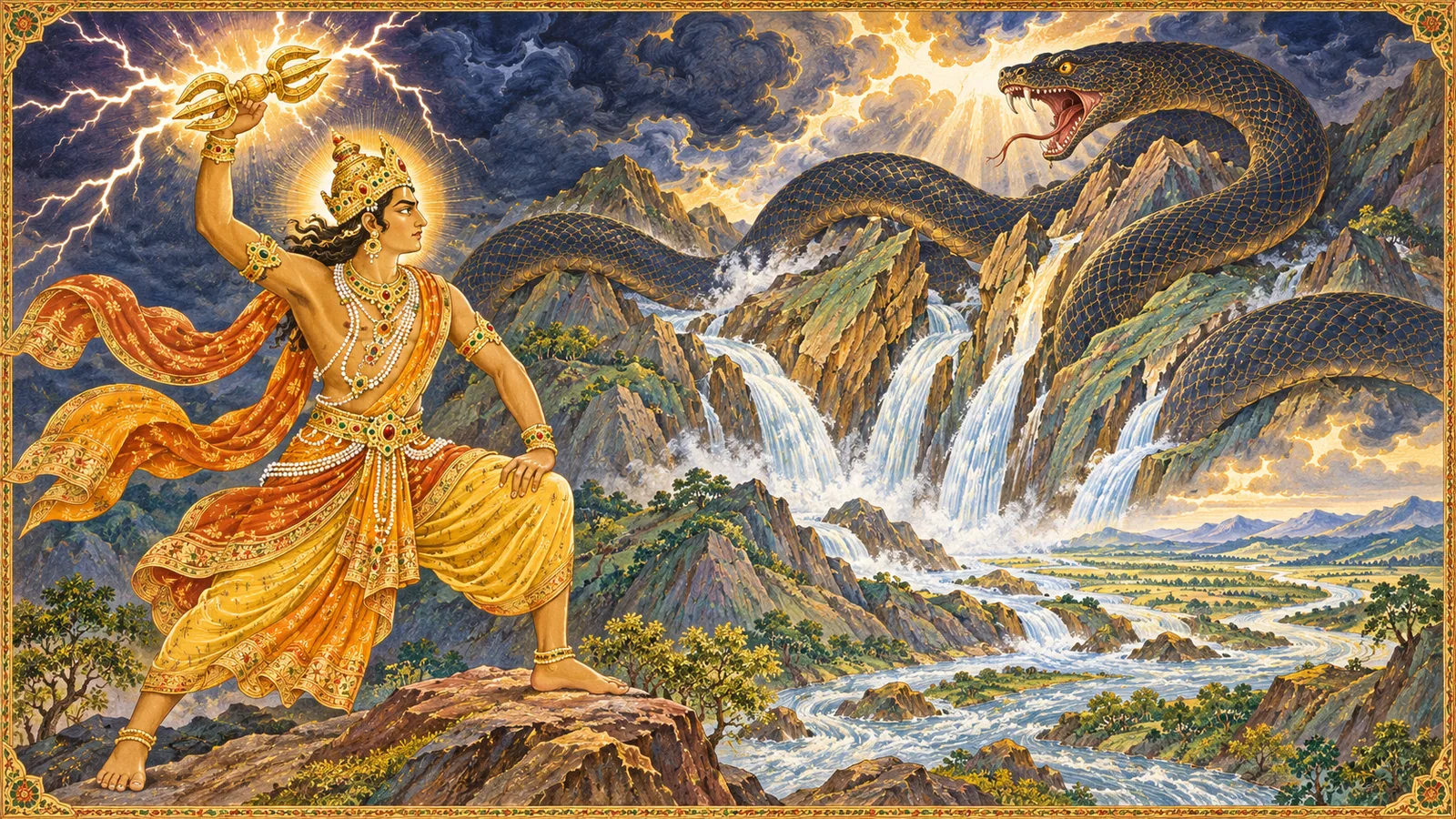
The hymn begins by announcing the heroic deeds of Indra. Its central action is given at once: he strikes the serpent-like restrainer, opens the waters and cleaves passages through the mountains.
This is not a court chronicle or a later biography. It is praise-poetry shaped around remembered divine action. The landscape is cosmic and immediate at the same time—storm, rock, river and power gathered into one song.
The vajra is fashioned
The divine artisan Tvashtar fashions the vajra for Indra. The weapon belongs to the thunder-bearing force of the scene, but the hymn’s attention quickly moves beyond the blow itself.
Once the obstruction is broken, the waters hurry onward like cows moving toward a calf. The comparison gives the released rivers direction and urgency: what was held back now knows its course.
Indra approaches
Indra drinks Soma, chooses the vajra and advances against Vritra. The hymn gathers preparation, strength and decision into a few swift verses.
Vritra is not treated as a minor obstacle. He is the first and greatest of the serpentine restrainers in this praise, wrapped around the mountain world and keeping its life-giving movement closed.
The restrainer of waters
The encounter is described through shattered obstruction. Vritra’s powers fail; sun, dawn and sky become visible; the one who enclosed the waters falls like a tree cut down.
Further verses intensify the image. The wounded restrainer lies across the courses, and the hymn names Danu, his mother, beside him. The language is compressed and formidable, refusing the smooth sequence of a modern battle scene.
The passages open
The waters move over and beyond the fallen obstruction. They had stood confined like cattle behind an enclosure; Indra opens the barred passages and their current resumes.
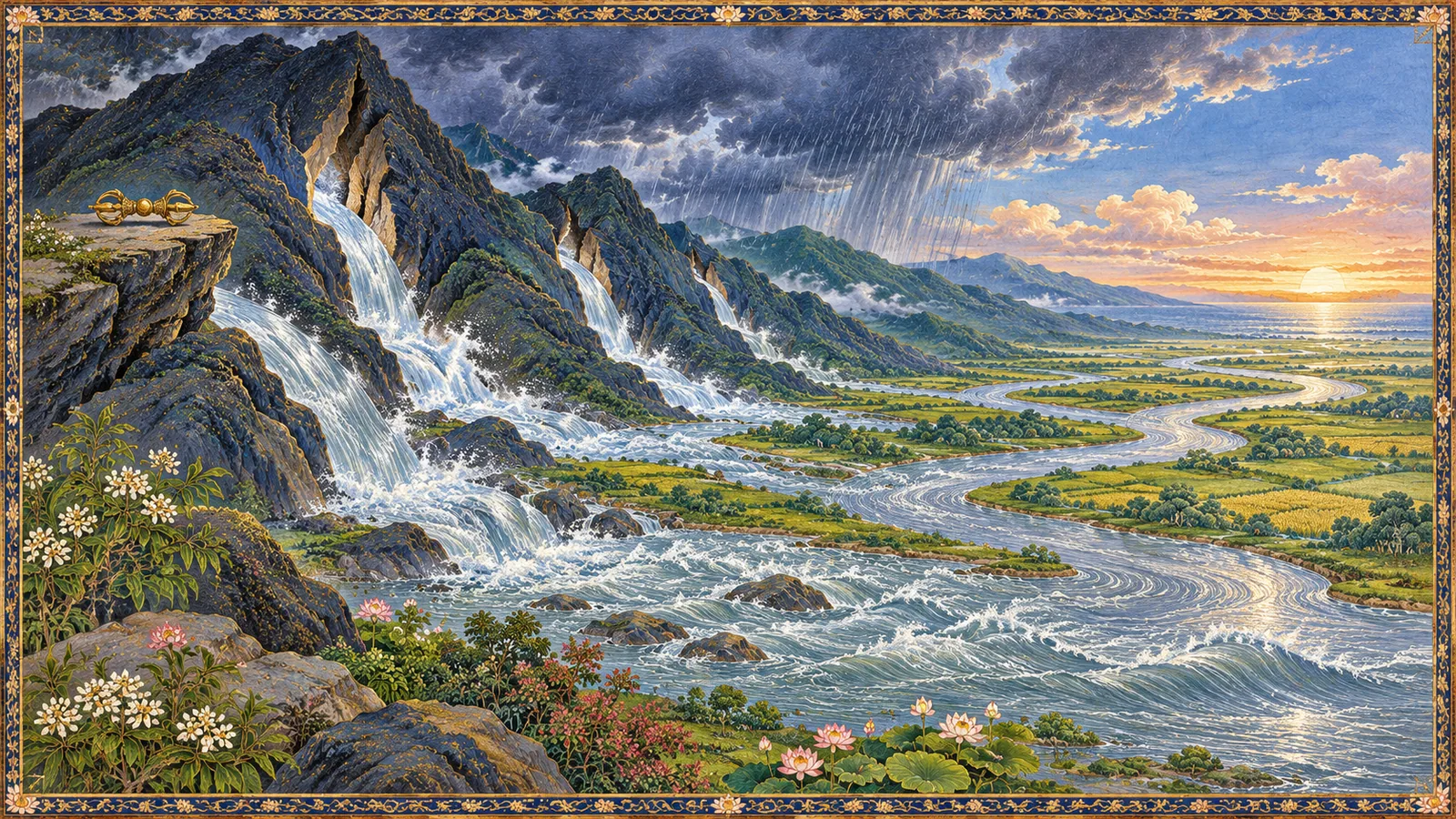
The victory is therefore more than the defeat of an opponent. The hymn celebrates release: rivers flow, light returns and the mountain no longer seals away what must move.
Thunder against thunder
Vritra does not remain passive. The hymn recalls a counterstroke against Indra and the display of thunder, lightning, mist and hail. Yet these powers do not prevent Indra’s advance.
The clash is elemental, but the poem measures its outcome through what becomes available again: the waters, the rivers and the open road of the storm.
The hymn turns to a question
Near its close, the hymn suddenly asks what Indra saw after striking Vritra that made him fearful. It compares his swift crossing of many streams to a falcon’s flight.
The question complicates a simple portrait of effortless triumph. The text praises Indra’s power while still allowing danger, movement and fear to remain within the encounter.
The closing praise
The final verse widens from the battlefield. Indra is praised as ruler over what moves and what stands still, over beings of many kinds and over the people who call upon him.
The wheel’s rim surrounds its spokes; in the hymn’s closing image, Indra’s sovereignty encompasses the worlds restored to movement. The song ends not at the strike, but with an ordered expanse in which waters flow again.
EDITORIAL REFLECTION / PAUSE & REFLECT
What changes when power
becomes release?
The hymn joins strength to the opening of what has been confined. Where does courage serve life by restoring movement rather than merely displaying force? This is an editorial invitation, not a translated verse.
TEXT & INTERPRETATION
One Rigvedic hymn.
Not every later Vritra account.
This reader follows Rigveda 1.32 in Dr Ganga Sahay Sharma’s Hindi edition based on Sayana’s commentary. It retains the hymn’s images of the vajra, mountain passages, confined waters, storm powers and closing sovereignty without turning every verse into a literal modern chronology.
Later texts tell substantially different stories about Vritra or Vritrasura, including genealogies, moral dilemmas and devotional teachings not present in this hymn. Those details are not inserted here. The figures, clothing, weapon design and landscape in the artwork are contemporary interpretations rather than historical reconstructions.
Read the verse map and edition notes